Mattress 101 · Materials and care
Natural Latex in Organic Sleep Systems: Feel, Resilience, and Care
Natural latex has a distinctive talent: It gives way under pressure, then springs back when the pressure is gone. That buoyant response is central to its appeal—and to the questions worth asking before choosing a latex mattress. How is the material made? What does “organic” actually certify? Will the surface suit your body and sleeping position? And what care does a latex sleep system need to last?
Understanding the answers means looking beyond a single label. Latex comfort depends on the foam’s formulation, firmness, thickness, layering, cover, and foundation. Its durability depends on construction and use, too. The result can be a supportive, responsive sleep surface, but “natural” or “organic” alone cannot predict how any mattress will feel—or whether it will be right for a particular sleeper.
What natural latex is—and what the label leaves unsaid
Natural rubber latex begins as sap from the rubber tree, Hevea brasiliensis. For mattresses, that liquid is processed into a foam. A finished latex core is not simply a block of unaltered sap: It is manufactured using a recipe and production process, and its feel and performance depend on how the material is formulated, cured, shaped, and assembled.
Product descriptions may use terms such as natural, natural latex, organic, or all-natural. Those words are not interchangeable guarantees. A mattress can contain natural latex without every part of the mattress—such as its cover, quilting, adhesives, or other layers—being natural or certified organic. Likewise, a product described as an organic mattress may refer to certain certified materials rather than every component in the finished bed.
Read the material breakdown, not just the headline. Look for clear information about the latex core, any other foam or fiber layers, the cover, and the method used to hold the materials together. If the description uses a certification, check what the certificate covers and whether it applies to the specific material or finished product. A certification can help verify particular claims, but it does not establish comfort, durability, or suitability for every sleeper.
It is also useful to distinguish environmental or material certifications from performance standards. Certifications may address the composition, processing, or testing of particular components. They do not replace a close look at the mattress construction, the manufacturer’s care instructions, or the fit with your bed base.
A feel defined by buoyancy
Latex tends to respond quickly. When a sleeper shifts position, the surface generally rebounds without the delayed, deep-sinking sensation commonly associated with some slow-response foams. Many people describe this as buoyant, springy, or lifted. The words are subjective, but they point to a real distinction in how the material responds to movement.
That quick rebound can make position changes feel easier for some sleepers. Rather than feeling held in a deep impression, the body meets a surface that yields locally and then recovers. For others, that same springiness may feel too lively or too firm. A mattress is not automatically comfortable because its material has desirable properties on paper; the overall construction needs to match the sleeper.
Pressure relief is another question of fit. Latex can compress beneath the shoulders, hips, and other areas that press more heavily into a mattress. Whether it compresses enough depends on firmness, layer thickness, body shape, and sleeping position. A side sleeper, for example, may need enough cushioning at the shoulder and hip to avoid uncomfortable pressure. A back sleeper may prioritize even support through the torso. These are useful starting points rather than rules: People vary, and the mattress’s complete design matters more than a simple label.
Motion transfer also deserves a measured view. Latex’s responsive feel does not mean that every latex mattress will behave the same way when a partner moves. The material, layer arrangement, mattress size, foundation, and sleeper sensitivity all contribute. If motion disturbance is a concern, consider the construction as a whole and, where possible, use a return or trial period to evaluate the bed in your own room.
Temperature is similarly individual. Latex is often chosen for a feel that is less enveloping than some slower, more conforming foams, but no material can guarantee a cool night. The cover, quilting, sheets, room conditions, humidity, and a person’s own temperature regulation all play a part. A mattress with wool, cotton, or other fibers over its core may have a different surface climate from a bare latex layer or a thickly quilted design.
Construction changes the experience
“Latex mattress” describes a broad family of sleep systems, not a single feel. A mattress might use one latex layer, multiple layers with different firmnesses, or a latex core paired with other materials. A quilted cover can soften the initial feel; a firmer base layer can influence support; and the foundation below the mattress can change how the system performs.
Some latex is made using the Dunlop process; some is made using the Talalay process. These are different manufacturing methods, and product makers may use them to create foams with differing characteristics. Neither name by itself tells you whether a mattress is better, more durable, or more comfortable. The finished feel depends on the specific formulation, firmness, dimensions, layering, and design. If a retailer or manufacturer provides process details, use them as part of the comparison—not as a shortcut around the full specification.
Firmness labels are not a universal scale. One maker’s medium may feel different from another’s, and a sleeper’s weight and body proportions can change how a given surface feels. A listed firmness is a useful reference, but it is not a promise of a particular experience. When possible, test the mattress in your usual sleeping position for long enough to notice whether pressure builds and whether your body feels well supported.
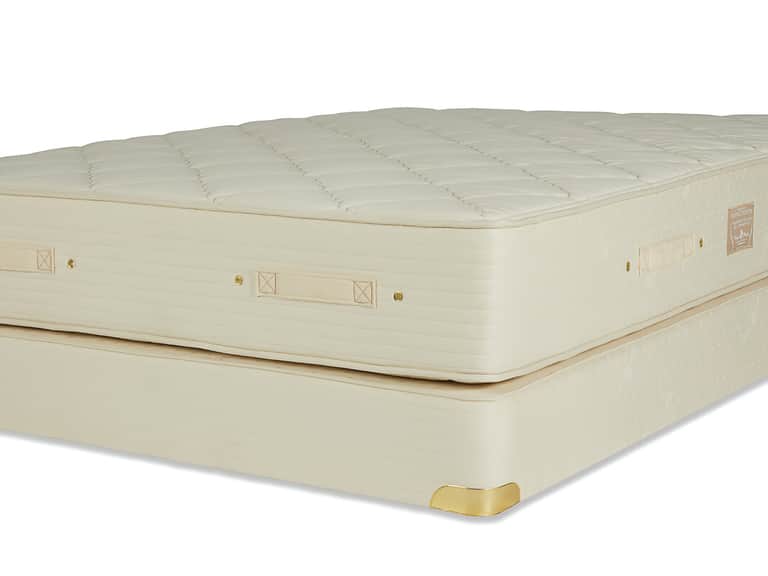
One example of a layered design is the Royal-Pedic Natural Latex Quilt-top Mattress with German Stretch Knit ticking. Its product description identifies an eight-inch natural latex core with firm and medium latex layers, along with a cotton cover and wool quilting. Those details illustrate why a material list is more informative than the phrase “latex mattress” alone: The core, comfort layer, and surrounding materials work together to shape the finished surface. The description is not a substitute for checking current specifications, care instructions, or the fit of a particular model with your needs.
How to compare organic latex options
A thoughtful comparison starts with the materials and continues through the complete sleep system. The following checklist can help organize questions without turning the process into a contest of marketing terms.
- Ask what is in each layer. Identify the latex, any additional foams or fibers, the cover fabric, and the quilting. If a description is vague, ask the manufacturer to clarify the complete construction.
- Understand what is certified. Find out whether a certification applies to the latex, a textile, a component, or the finished mattress. Read the scope rather than assuming a single label covers every material.
- Compare firmness and thickness. A mattress’s overall feel is not determined by the word “latex.” Consider layer depth, firmness descriptions, and how the product is intended to be used.
- Check the cover and quilting. Natural fibers and quilted layers can affect the hand-feel and surface climate. They also have their own cleaning and maintenance requirements.
- Confirm the foundation requirements. Ask what type of platform, slat spacing, or adjustable base is approved. A supportive and compatible base helps the mattress function as intended.
- Read the warranty and trial terms. Understand what is covered, what counts as a defect, and how returns or exchanges work. A warranty is not a guarantee that a mattress will feel comfortable to every person.
- Review care instructions before buying. Latex cores and mattress covers may have different cleaning requirements. Clear instructions are especially important if a component is not machine washable.
Claims about “chemical-free,” “non-toxic,” or “hypoallergenic” warrant particular care. These terms can be broad and may not communicate exactly which substances were tested, what thresholds were applied, or which product components were included. Seek specific, documented information and consult a qualified health professional about personal sensitivities. A material description alone cannot diagnose or prevent an allergy.
Resilience is not the same as indestructibility
Latex is valued for its ability to recover after compression, but resilience should not be confused with a promise that a mattress will never soften or change. Every sleep surface is subject to repeated loading, and its long-term performance reflects material quality, construction, use, the foundation, and care. Heavy or concentrated loads, unsuitable support, moisture, and rough handling can affect a mattress over time.
It is also important to separate ordinary settling from a defect. A small change in feel may be part of use; a visible depression, damage, or unexpected change may need attention. Warranty definitions vary, so retain the documentation and review the manufacturer’s standards rather than assuming that any change will be covered.
For a new mattress, allow a reasonable adjustment period. A surface can feel unfamiliar compared with an old bed, and the body may need time to adapt. Keep notes on persistent pressure, discomfort, and the conditions in which they occur. If pain is severe, continues, or raises health concerns, seek advice from a qualified clinician rather than relying on mattress changes as a substitute for care.
Practical care for a latex sleep system
Good care is often uneventful: use the right base, protect the mattress from spills, keep the room reasonably dry, and follow the maker’s instructions. The goal is not to treat latex as fragile, but to avoid preventable damage and preserve the integrity of the complete mattress.
Use a suitable foundation
Check the mattress maker’s requirements for a bed frame, platform, slats, or adjustable base. Slats may need to be spaced within a specified distance, and the frame should provide stable support across the sleeping surface. A base that is damaged, uneven, or not approved can compromise support and may affect warranty coverage. Do not assume that every latex mattress is compatible with every adjustable frame.
Protect against moisture and stains
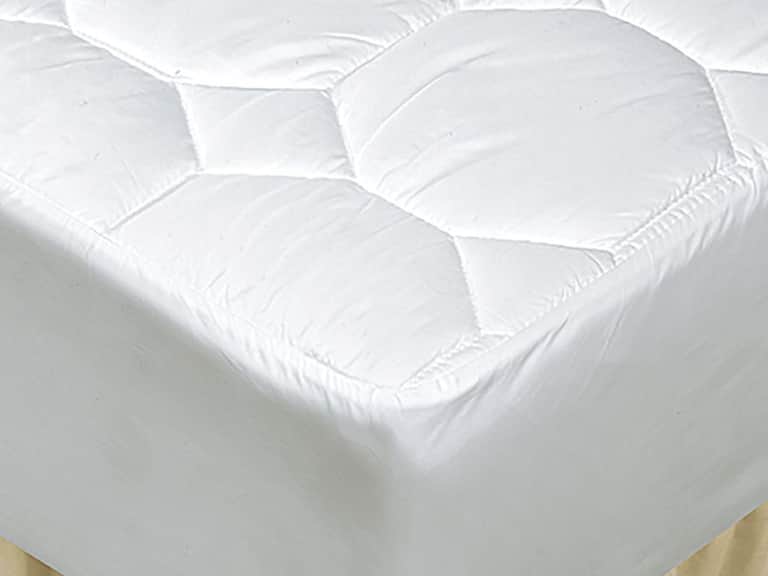
A well-fitted protector can help guard against everyday spills and body moisture, but choose one that suits the mattress and does not create an unwanted change in feel. Follow the protector’s wash instructions separately. If a spill reaches the mattress, consult the manufacturer before applying cleaners or soaking the material. Avoid saturating a latex core: Trapped moisture can be difficult to remove and may create conditions for odor or deterioration.
Clean gently
Do not put a latex core in a washing machine or submerge it unless the manufacturer explicitly instructs otherwise. For a removable cover, follow its own label, including any limits on washing, drying, or dry cleaning. For the mattress itself, use only a method approved by the maker. Strong solvents, bleach, abrasive scrubbing, and excessive heat can damage materials or finishes.
Handle with support
Latex layers can be heavy and flexible. When moving a mattress or core, get help and support it evenly instead of pulling hard on one edge or bending it sharply. Follow instructions for carrying, lifting, and positioning. If the mattress has removable layers, keep them in their intended order and orientation.
Rotate only when recommended
Some mattresses may be rotated head to foot; others may have a designated top and bottom or are not intended to be flipped. Follow the product’s directions. A scheduled rotation can help distribute use when permitted, but flipping a one-sided mattress or rearranging layers without guidance can change its design and feel.
Keep the sleep environment ventilated
Ordinary room ventilation and dry bedding can help limit lingering moisture. Allow sheets and blankets to air when practical, particularly in humid conditions. This is general housekeeping, not a cure for dampness or mold. If a mattress becomes persistently wet, develops an unusual odor, or shows visible damage, contact the manufacturer for appropriate guidance.
A material choice, not a guarantee of better sleep
Natural latex can be a compelling choice for people who like a responsive surface and want to compare sleep systems made with clearly described materials. Its springy feel, layered construction, and potential for long service make it worthy of consideration. But no material, certification, or price point can guarantee comfort or resolve every sleep problem.
The most useful decision is grounded in specifics: how the mattress is built, what its labels substantiate, how its firmness feels to your body, and whether its foundation and care needs fit your home. When the details are clear, “natural latex” becomes more than a polished phrase. It becomes a material you can evaluate—one layer, one claim, and one night’s comfort at a time.
At a glance: before choosing a latex mattress
- Look for a complete materials breakdown rather than relying on a single “organic” or “natural” claim.
- Check which components a certification covers and what it actually verifies.
- Compare firmness, layer thickness, cover materials, and foundation requirements.
- Use a trial period, when available, to assess comfort in your normal sleeping position.
- Protect the mattress from moisture and follow the manufacturer’s specific cleaning and rotation instructions.